
How to Avoid Gluten Cross Contamination
A practical guide to keeping gluten-free food safe at home.
While cross contamination is important to understand, the good news is that it becomes much easier to manage once you know the key places gluten can accidentally enter food.
If you’re new to gluten-free living, you may find our Start Here guide for gluten-free families helpful as a first step.
When someone in your family is diagnosed with coeliac disease, one of the first things you’ll hear about is gluten cross contamination.
At first, this feels overwhelming. Many parents worry they need to throw out their entire pantry or replace every appliance in the kitchen.
Once you understand where cross contamination happens and how to prevent it, it quickly becomes part of everyday cooking.
What Is Gluten Cross-Contamination?
Cross contamination (also called cross contact) happens when gluten from a gluten-containing food is accidentally transferred to food that should be gluten-free.
Examples include:
In simple terms, gluten-free food becomes contaminated when it touches gluten somewhere along the way.
Why Cross Contamination Matters
For people with coeliac disease, even small amounts of gluten can trigger an immune reaction that damages the small intestine.
Sometimes this causes symptoms like stomach pain, fatigue or headaches. Other times there may be no obvious symptoms, even though damage is still occurring.
This is why avoiding cross contamination is an important part of following a strict gluten-free diet.
Do You Need a Completely Gluten-Free Kitchen?
In most homes, the entire kitchen doesn’t need to be gluten-free.
Other family members can continue eating gluten-containing foods as long as some basic precautions are followed.
Some families choose to make their home fully gluten-free simply because it feels easier. Others keep both gluten and gluten-free foods in the same kitchen and manage them safely.
Both approaches can work.
How to Prevent Gluten Cross Contamination at Home:
Most cross-contamination risks can be avoided with a few practical kitchen habits:
Communicate With Everyone in the Household
Make sure everyone in the home understands the basics of gluten safety – including partners, children, babysitters, grandparents and visitors.
This includes:
- what gluten is
- which foods contain gluten
- why cross contamination matters
- the kitchen rules your household follows
Clear communication prevents many accidental mistakes.
Keep Gluten and Gluten-Free Foods Organised
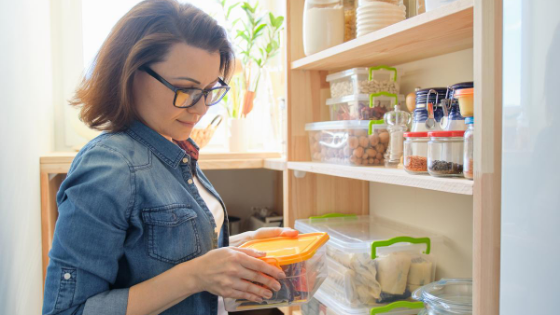
Store gluten-free foods separately so they are easy to identify.
This might include:
- a dedicated gluten-free pantry shelf,
- clearly labelled containers,
- keeping gluten free snacks in a different basket in the pantry,
This helps avoid accidental mix-ups when cooking, or snacking.
Clean Surfaces and Utensils Before Cooking
Before preparing gluten-free food, make sure the preparation area is clean. Simple steps include:
- wiping benches with a clean, damp cloth
- washing utensils in warm soapy water
- cleaning chopping boards
- washing hands before cooking
Shared Kitchen Equipment & Appliances
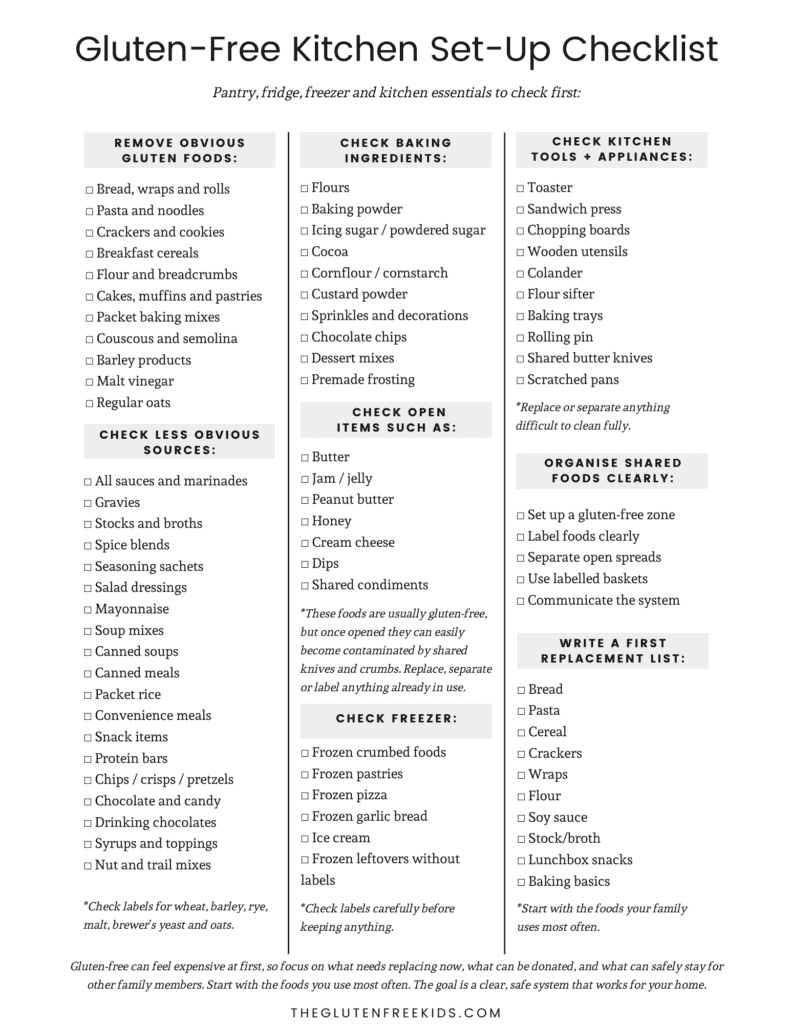
Some kitchen tools and appliances can collect crumbs or flour residue, and are harder to clean thoroughly. Because of this, many families choose to keep certain items separate for gluten-free cooking.
Common examples include:
- toasters
- colanders (pasta strainers)
- chopping boards
- flour sifters
- sandwich presses
- waffle makers
- bread makers
- air fryers used for crumbed foods
Toasters are one of the most common issues because crumbs collect inside and are difficult to remove. Using a separate toaster or toaster bags helps keep gluten-free bread safe.
If appliances are shared, it helps to:
- clean them thoroughly between uses
- cook gluten-free foods first where possible
- use baking paper as a barrier if needed
Cook Gluten-Free Foods Safely
When preparing meals that include both gluten and gluten-free foods:
- cook gluten-free foods first when possible
- use fresh water for gluten-free pasta
- drain gluten-free pasta first or use a separate colander
- use separate utensils when cooking
If cooking on a shared BBQ or grill, place gluten-free food on foil or a tray so that it can help keep it separate and easily identifiable as ‘gluten-free’.
Use Clean Oil for Frying
Gluten does not ‘dissolve’ in oil or high temperatures, and crumbs from battered or crumbed foods can remain in the oil and contaminate other foods. To reduce the risk of contamination:
- cook gluten-free foods first,
- use fresh oil,
- avoid using oil that has previously cooked crumbed gluten foods
Avoid Crumbs in Shared Spreads
Butter, jam and other spreads are a very common source of cross contamination. This usually happens when a knife touches bread and then goes back into the container. Especially when we have children involved!
To prevent this:
- use a clean knife each time,
- introduce a ‘no double dipping’ rule,
- keep a separate gluten-free butter if needed.
FAQs About Gluten Cross-Contamination
No. Gluten does not spread through the air during normal cooking.
The main risks come from crumbs, flour dust and shared utensils.
Yes. Gluten cannot contaminate food through oven air. Placing gluten-free foods on the top shelf can help avoid spills and crumbs from above.
Yes. Washing dishes with warm soapy water or in a dishwasher removes gluten from utensils and plates.
Managing a Gluten-Free Kitchen
Preventing cross contamination is mostly about consistent kitchen habits.
Once your pantry and fridge is organised and everyone in the household understands the basics, preparing gluten-free meals becomes much easier.
New to Gluten-Free Living?
If your child or family member has recently been diagnosed with coeliac disease, learning about cross contamination is just one step in managing a gluten-free home. You may also find these guides helpful:
• Start Here: Gluten-Free Living for Families
• How to Read Gluten-Free Labels
• Setting Up a Gluten-Free Pantry
• Gluten-Free Pantry Staples List
Guidance Based on Coeliac Safety Recommendations
The kitchen practices in this guide reflect the general food safety advice recommended by organisations such as Coeliac Australia for managing a gluten-free diet at home.
Every household will organise their kitchen a little differently, but the key principles are the same: keeping gluten-free foods separate, maintaining clean preparation areas, and avoiding crumbs or residue from gluten-containing foods.
If you are newly diagnosed or unsure about any aspect of managing coeliac disease, it’s always a good idea to speak with a healthcare professional or accredited dietitian experienced in coeliac disease.