
START HERE:
Gluten-Free Living
Welcome!
I’m Gem – a mum of three gluten-free kids, and I know just how overwhelming gluten-free life can feel when you’re first thrown into it.
There’s suddenly a lot to figure out: ingredients, food labels, cross-contamination, school lunches, birthday parties, and how to cook meals your child will actually eat.
I’ve been living this life since my eldest was diagnosed with coeliac in 2013. Over the 12+ years, I’ve made plenty of mistakes, tested a lot of products, adapted countless recipes, and learnt what actually works for a busy family.
That’s exactly why I created The Gluten Free Kids – to make gluten-free living feel simpler, clearer, and far less overwhelming for families.
Here you’ll find practical guides that explain the essentials, along with easy gluten-free recipes designed for real life and real kids.
If you’re just looking for something to cook, you can browse all gluten-free recipes here.
Below are the guides I’d start with if you’re new to gluten-free living:
1
Gluten-Free Living (The Basics)
If you’re new to gluten-free living, this is the best place to begin. These guides explain what gluten is, which foods contain it, and how to navigate everyday situations like shopping, eating out, travelling, and social events.
Start with these articles:
- Gluten-Free Starter Guide for Beginners
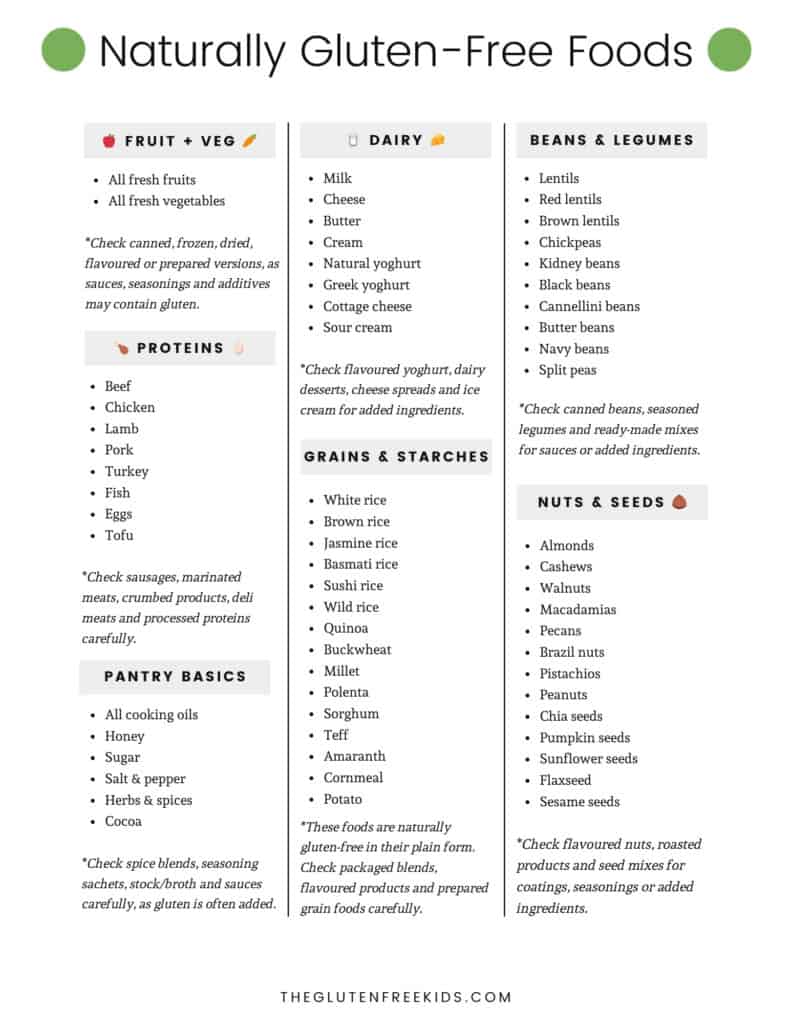
- Gluten-Free Foods List: What We Can Eat
- Hidden Sources of Gluten
- Common Mistakes When Starting Gluten-Free
- Gluten-Free & Eating Out
- Gluten-Free on a Budget
- Gluten-Free at Birthday Parties
- How To Find The Best Gluten-Free Products Near You
2
Gluten-Free Kitchen
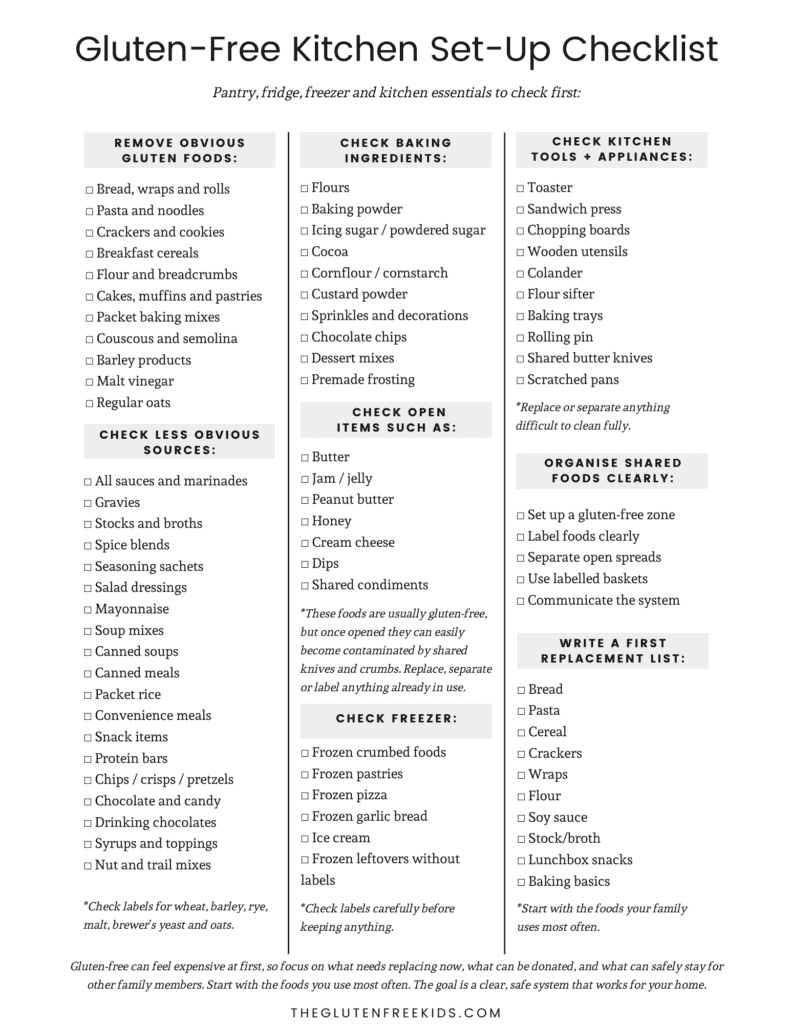
Once you understand the basics, the next step is learning how to manage gluten-free food safely at home. Most families can successfully cook both gluten and gluten-free foods in the same kitchen with a few simple habits and a little organisation.
These guides explain how to set up a kitchen that works for your whole family:
- How to Avoid Gluten Cross-Contamination
- Gluten-Free Kitchen Set-Up: How to Safely Reset Your Pantry
- Gluten-Free Pantry Staples
- Gluten-Free Baking Ingredients Explained
3
Gluten-Free Recipes
One of the biggest concerns parents have when starting gluten-free is simply:
What will my child actually eat?
The good news is that gluten-free food doesn’t need to be complicated or full of unusual ingredients. Many everyday meals can easily be adapted to be gluten-free.
Explore these recipe collections:
- Gluten-Free Breakfast Recipes
- Gluten-Free Lunchbox Ideas
- Gluten-Free Snacks
- Gluten-Free Party Food Recipes
Or you can browse all gluten-free recipes here →
4
Gluten-Free Kids
Being gluten-free isn’t just about food. For children it also affects school, birthday parties, playdates, and social situations.
These articles help parents support their children while keeping them safe:
- Gluten-Free Birthday Parties
- School Lunchbox Tips
- Hosting Gluten-Free Friends
5
Frequently Asked Gluten-Free Questions
These are just some of the most common questions people ask when starting a gluten-free diet:
Not necessarily. Gluten-free is essential for people with Coeliac disease, but it is not automatically healthier for everyone.
A gluten-free cake is still a cake.
Some gluten-free products can actually be lower in fibre or higher in sugar and starch than regular versions, which is why many gluten-free families rely heavily on naturally gluten-free foods such as fruit, vegetables, meat, eggs, rice, potatoes and dairy as the everyday foundation.
For people who medically need it, gluten-free helps the body heal. For everyone else, it is simply a different way of eating – not automatically a healthier one.
No – wheat-free and gluten-free are not always the same.
Wheat is only one source of gluten. Gluten is also found in barley, rye, malt and oats, so a product can be wheat-free but still contain gluten.
For example, something made with barley malt may be wheat-free but not gluten-free.
👉 Read my full guide on Why Wheat-Free Doesn’t Always Mean Gluten-Free.
Oats are often contaminated with wheat, barley or rye during growing and processing.
Some people with Coeliac disease also react to a protein in oats called avenin, even when the oats are certified gluten-free.
Because oat recommendations vary by country, always follow your local medical advice and product labelling.
Gluten cross-contamination happens when gluten-free food comes into contact with gluten, even in the tiniest amounts.
This can happen through shared toasters, chopping boards, knives, butter tubs, crumbs on benches, or pasta water.
For someone with Coeliac disease, even tiny traces matter.
👉 Read my full guide on Gluten Cross-Contamination and Shared Kitchens.
For Coeliac disease, it needs to be completely strict – every day, every meal, even when symptoms are not obvious.
Even small amounts of gluten can damage the small intestine, whether someone feels sick immediately or not.
That is why label reading, checking ingredients, and avoiding cross-contamination become so important over time.
Gluten-free products often cost more because they are made in smaller batches, use different ingredients, and require stricter manufacturing controls.
A loaf of gluten-free bread is the classic example – smaller loaf, higher price, somehow gone in ten minutes if you live with hungry teenagers 😅.
That is why many gluten-free families save money by using specialty products strategically and building meals around naturally gluten-free foods where possible.
Both spellings mean exactly the same condition.
Celiac is the spelling commonly used in the United States and Canada.
Coeliac is the spelling commonly used in Australia, United Kingdom and New Zealand.
I usually use coeliac because I’m writing from Australia – but both are correct.
Ready to Start Cooking?
If you’re looking for somewhere to begin, these recipes are great first choices:
• Gluten-Free Muffins
• Gluten-Free Pancakes
• Gluten-Free Brownies
• Gluten-Free McDonald’s-Style Chicken Nuggets
Simple recipes like these make gluten-free life much easier for busy families.